Weekly Movie Roundup

I watched a dozen movies last week:

The Mastermind Becky Sharp Ball of Fire Die My Love
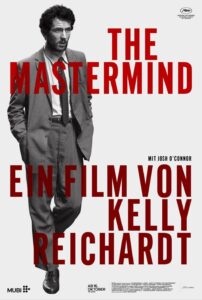
  • The Mastermind is, I suppose, a deconstruction of the heist movie, in that the heist, and even the motives for it, are of less interest to writer/director Kelly Reichardt than the quiet collapse of the inevitable aftermath. It’s not necessarily my favorite of Reichardt’s films, but only because she’s made so many good ones.
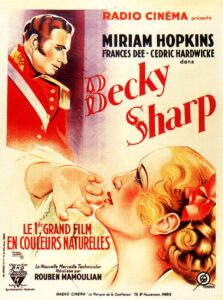
    • I’m not overly familiar with Vanity Fair, the novel or film adaptations, or the character of Becky Sharp first portrayed there. She threatens to be a little one-note here, were it not for the very winning (and Oscar-nominated) performance by Miriam Hopkins.
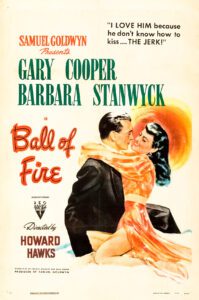
      • Ball of Fire is dated and corny as all get out, but it’s also a charmingly goofy riff on Snow White and the Seven Dwarves.
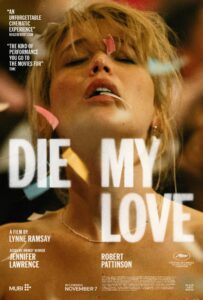
        • Jennifer Lawrence’s descent into madness in Lynne Ramsay’s Die My Love is never entirely explained, but that’s precisely why the film works so well. It’s raw and emotional and seen through Lawrence’s genuinely bravura performance.
        Mission: Impossible - The Final Reckoning High Society Sentimental Value The Running Man
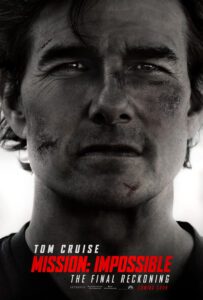
        • I’ve seen worse movies than Mission: Impossible – The Final Reckoning. I’ve maybe even seen worse movies in the same series. But this was such a remarkably weak note to end everything on. The film is full of silly exposition, clips from the rest of the franchise, and a not very successful attempt to tie the series together in neat cinematic-universe bow—all while being surprisingly light on fun action set-pieces.
          • The considerable charms of its cast—particularly Grace Kelly—notwithstanding, High Society is surprisingly bad. It lacks the sharp screwball comedy dialogue of The Philadelphia Story, on which it’s ostensibly based, its plot is overly confused and convoluted, and the one new thing it’s supposed to be bringing to the table, namely the musical numbers, aren’t particularly good.
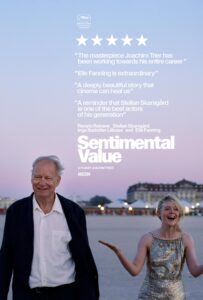
            • Sentimental Value is such a beautiful and human story of family and depression, of art’s ability (and failure) to combat it, and it’s full of wonderful performances.
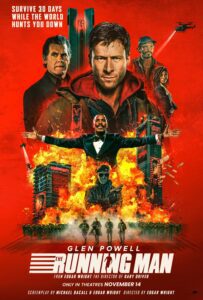
              • I’m starting to worry, because with The Running Man, the number of Edgar Wright movies I don’t like is starting to approach the number of his films that I genuinely love. I didn’t particularly enjoy his last movie, Last Night in Soho, but at least that was still stylish and distinctive, whereas this one is so anonymously directed, full of plot holes and poorly conceived set-pieces, and it’s hard to understand what anyone involved was bringing to the table.
              Joy House Bugonia Blackmail Sorry, Baby
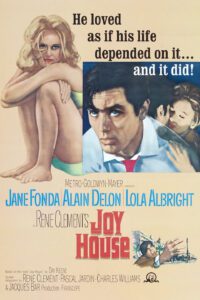
              • Joy House is more than a little odd, and on paper its plot would likely seem ridiculous, but it benefits enormously from Alain Delon and Jane Fonda, and a decent sense of style.
                • There’s a moment near the end, an admirably big swing, in Bugonia that maybe lost me a little, and that possibly undermines everything else the movie up until then seemed to be doing, but it’s an interesting ride all the way.
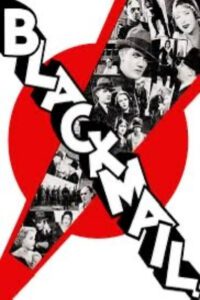
                  • Although it’s Hitchcock’s (and maybe England’s) first talkie, Blackmail behaves much more like a silent film, and fully is one for long stretches. That’s not infrequently to the movie’s benefit, since Anny Ondra has a remarkably expressive face perhaps better at conveying strong emotion than delivering the film’s dialogue, and there are many expertly framed shots that don’t really require any sound.
                    • For a movie about such heady topics as assault and depression, Sorry, Baby is a wonderfully warm and funny film, and a remarkably self-assured debut from writer/director/star Eva Victor.

                    I also rewatched the delightful A Matter of Life and Death. It’s maybe not my favorite of Powell and Pressburger’s movies, but it’s easily in the top five.

                    Weekly Movie Roundup

                    Last week, I watched 8 movies:

                    Wake Up Dead Man Keeper Roofman F1
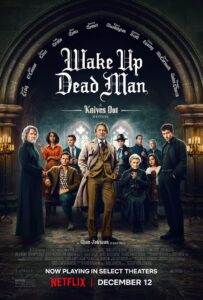
                    • Like the previous two films in the series, Wake Up Dead Man is a fun murder mystery full of outsized characters, but I think what I liked most about it was its honest examination of faith and service, what a life actually dedicated to god’s love and compassion would look like.
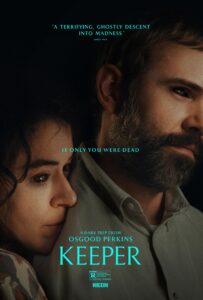
                      • Keeper is underbaked in its story and characters, and it feels more like an excuse for Osgood Perkins to work again with Tatiana Maslany than a fully formed movie. But you can’t exactly fault him for that, because she’s good again here, in a committed performance that makes the whole thing work better than it should. There also a lot of very surreal and creepy imagery, and even if the movie isn’t anywhere near the equal of some of Perkins’ other horror films, it’s not uninteresting.
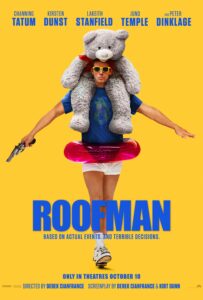
                        • Roofman takes an odd tonal shift late in the film, which is probably necessary—given the real man it’s about—and which I think lends it a little more depth than the goofy comedy it’s been up until then. But it can’t help but feel like a tonal shift.
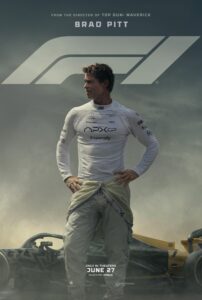
                          • Your mileage may vary with F1, depending on how much you love, or understand, Formula 1 as a sport. (Personally, I couldn’t really track more than “fast cars go fast,” even if it does seem oddly more complicated than that.) A lot of the racing is undeniably kinetic, even thrilling, even on a small screen, and there’s a lot of easygoing charm to the performances. But you can see where the story is headed from a mile lap away, the racial politics (which the movie doesn’t really acknowledge) are tired, and the fast cars aren’t nearly enough to carry the day.
                          Man Finds Tape One Battle After Another The Long Walk Megadoc
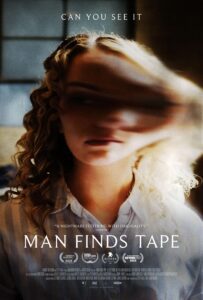
                          • Man Finds Tape does some creepy and interesting things, making not altogether unfamiliar ground feel like strange and unknown territory. It doesn’t necessarily do a lot with its premise, but it’s an interesting use of the found-footage genre.
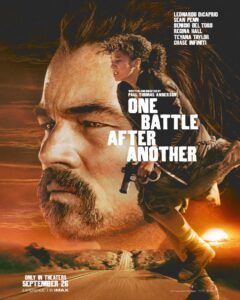
                            • One Battle After Another is a lot of fun, not afraid to take some very silly, and then some very serious, swings. It has the feel of a movie I want to see again to fully appreciate, but I liked it a lot on this first viewing.
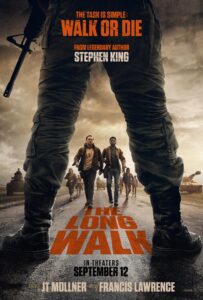
                              • The Long Walk is a very good adaptation of Stephen King’s original novel, which means it’s an exceptionally bleak, and not particularly subtle, experience. But what King’s, and the movie’s, metaphor perhaps lacks in subtlety, it makes up for in its gut-punch simplicity, and the very compelling performances byCooper Hoffman and David Jonsson.
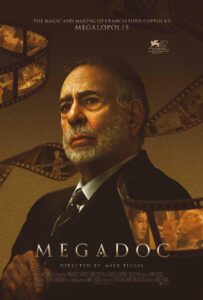
                                • Megadoc doesn’t necessarily explain why Francis Ford Coppola’s Megalopolis is such a bad movie, but it maybe offers some insight into why it’s the kind of bad movie it is. (It would be shocking, after seeing Mike Figgis’ behind-the-scenes footage, to discover that a good movie had come out of any of this.) Figgis’ documentary obviously calls to mind the earlier Hearts of Darkness about Coppola’s difficulties shooting Apocalypse Now, but here seems much more at a distance, admittedly focusing on only the handful of actors and crew who gave him the most access. (Which probably means too much Shia LaBeouf, but I was actually pleasantly surprised by how candid and owning up to past bad behavior he was, even if I still very much dislike his performance and he still seems a little like a method ass.) Figgis also stops short of the reaction to the film, ending as the curtain rises on its premiere at Cannes as if everything that came after was another crowning achievement for Coppola. It’s an interesting look at what might have been, but it’s not a redemption for Coppola’s last film. I’m glad both exist—one as a crazy passion project, the other a testament to why sometimes passion alone isn’t enough—but I’m not sure I’d ever find reason to rewatch either.

                                However, I did rewatch Eyes Without a Face, which I did not remember well, and certainly did not remember being this hauntingly sad. As – Guillermo del Toro told the Criterion Channel about the film, “At the core of every horror that film I’ve ever loved, there’s a poem in it.”
                                I watched another 6 movies last week:

                                Maps to the Stars George Washington La Llorona
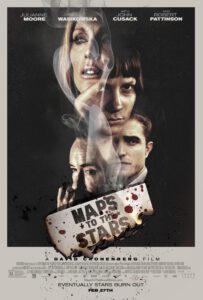
                                • I’m not sure Map to the Stars is particularly insightful as a satire, or has anything to say beyond “aren’t celebrities weird and awful?” But they are particularly weird and awful here, in some interesting ways, with good performances, so it’s worth a quick tour.
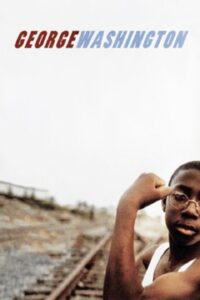
                                  • George Washington maybe felt like more of a groundbreaking indie upon its release in 2000—Roger Ebert called it “such a lovely film” full of “voluptuous languor—but there is still something to be said for its sad and quiet beauty, the understated performances by largely non-actors.
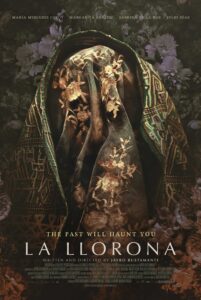
                                    • La Llorona is devastating and scary.
                                    3:10 to Yuma Cotton Comes to Harlem The King and I
                                    • I don’t know that 2007’s 3:10 to Yuma is any better than the 1957 version, but it’s helped enormously by the two lead performances.
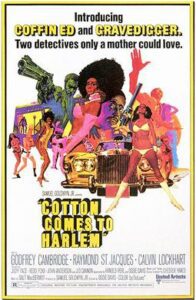
                                        • There are probably better, or least more important, blaxploitation movies that came after Cotton Comes to Harlem, but it’s a fun ride nonetheless.
                                          • The King and I certainly isn’t non-problematic in its casting and its dated lack of racial sensitivity, but I don’t think it’s ever intentionally dismissive or insulting to the culture it’s trying to portray. Both Brynner and Kerr are good in the roles, and there are some lovely songs.

                                          I also rewatched the lovely and heartbreaking Rachel Getting Married, which was one of Jonathan Demme’s best films. And I say that knowing he made The Silence of the Lambs.

                                          Weekly Movie Roundup

                                          I watched just 6 movies this week:

                                          Fedora Lonesome A Big Bold Beautiful Journey
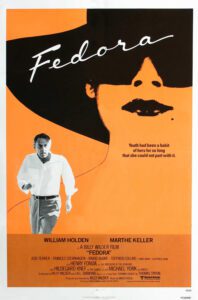
                                          • Fedora felt very old-fashioned when it was made, Billy Wilder trying to recapture something of Sunset Boulevard almost thirty years later, in a new Hollywood that was quickly leaving old studio pros like himself behind. As such, it feels very much like an old man’s film, and not Wilder’s, or star William Holden’s, best. (One was near at the end of his career, the other near the end of his life.) Since then, almost another five decades have passed, making this seem like some kind of weird, albeit occasionally interesting, relic.
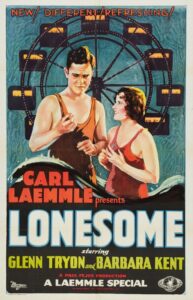
                                            • As a “part-talkie,” Lonesome is an interesting film, employing all sorts of film tricks—not least of all sound—to tell a very conventional story. There’s not a lot to the story, or even characters, but it’s an interesting snapshot of 1920s New York and the end of the silent film era.
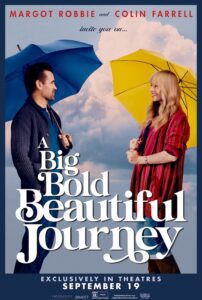
                                              • Colin Farrell and Margot Robbie are charming together, and the movie around them is occasionally as well, but even if I can appreciate a lot of the big, weird swings that A Big Bold Beautiful Journey takes, a lot of them just don’t connect—and at least a couple fail to connect pretty spectacularly. The movie’s heart is in the right place, even if that place is sometimes hard to find in all the mess.
                                              Loving Phoenix An Angel for Satan
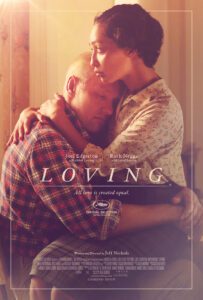
                                              • The quiet, understated pace of Loving is both a strength and, possibly, a weaknesses, but it’s all so well grounded in the performances of Ruth Negga and Joel Edgerton.
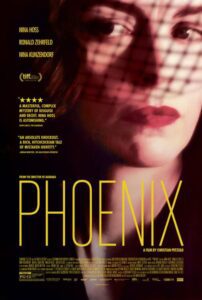
                                                • On paper, the plot of Phoenix—which I’d actually recommend not knowing much of anything about beforehand—might sound a little contrived, but I found it incredibly powerful and moving, and the end especially devastating.
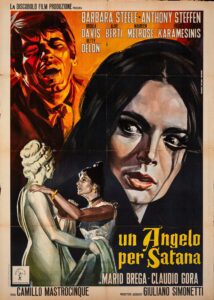
                                                  • Questionable dubbing, overwrought melodrama, a deeply confusing plot—these are all par for the course with 1960s Italian gothic horror, and An Angel for Satan is no exception. Could I explain any of what happens in the movie, or why? Only far enough to give me a headache when my explanation falls apart. And yet the movie looks and (dubbing aside) sounds great, and Barbara Steele, whatever it is that her character is meant to be doing, is a genuinely arresting screen presence.