Weekly Movie Roundup

Last week, I watched 24 movies. That’s maybe a lot—some might argue too many.

The Gingerbread Man Ganja & Hess Train Dreams While the City Sleeps
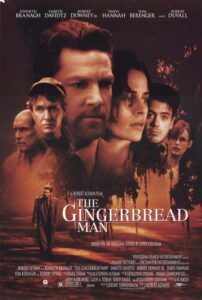
  • Your mileage may vary depending on your fondness for ’90s trash, but that’s really all The Gingerbread Man is. A little late to the game for John Grisham adaptations, this one isn’t even based on a book, but a discarded manuscript, and it kind of shows. The movie presses over-qualified actors into a lazy plot and not altogether convincing Southern accents, and while Altman’s considerable skill as a director is evident—if only because it’s easy to imagine this going completely off the rails with a less competent lead—his trademark overlapping dialogue seems ill-suited to a suspense thriller like this.
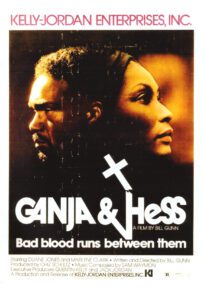
    • Ganja & Hess isn’t necessarily a coherent narrative, or even an expertly made film, but there is something compelling about it—not least for its representation in horror of black filmmakers and characters.
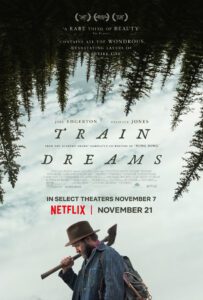
      • Train Dreams may not appeal to anyone looking for a tidier or more straightforward narrative, or wanting something to connect all its loose threads, beyond the fact that a life largely is loose threads. But I found it genuinely beautiful, sad and elegiac, anchored in a wonderful performance from Joel Edgerton.
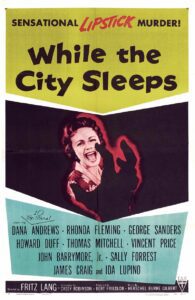
        • I heard Patton Oswalt describe While the City Sleeps as a “rough draft of what Hitchcock did with Psycho,” in that it explores some of the luridly psychological themes, but maybe not quite as well. It’s an interesting movie, with a strong cast, maybe leaning closer to film noir than the proto-slasher Hitchcock delivered, but it doesn’t necessarily hang together well.
        Benedetta Blue Chips Black Angel Descendent
        • “Is Verhoeven’s explicit sexualization of religion [in Benedetta] a shallow provocation,” asked critic Brian Tallerico, “or a deep analysis of how implicit gender bias within institutions of faith only leads to violence and abuse? I’m honestly not entirely sure.” Honestly, me neither. It’s a compelling movie, and probably one that only Paul Verhoeven could have made, but what it’s trying to say isn’t always very clear.
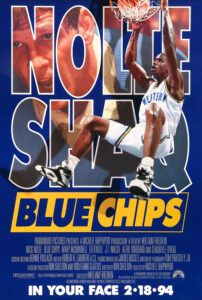
          • Blue Chips, wrote Roger Ebert, “projects a certain cynicism even in the midst of its bedrock morality. The message seems to be that although one man can take a stand, the system has been too corrupt for too long to change.” That maybe makes the movie sound less fun than it can sometimes be, or undersells the strength of Nolte’s performance as that one man.
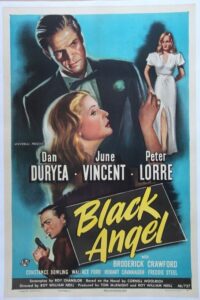
            • Black Angel isn’t a terrific film noir, but it does have a devilishly fun turn by Peter Lorre and a legitimately interesting twist.
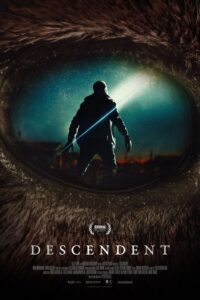
              • Descendent is a little disappointing in the end, not quite landing the thematic connections it’s aiming for, but it’s very creepy and unsettling all along the way, with a really strong performance from Ross Marquand.
              Jurassic World: Rebirth Vernon, Florida Curse of the Crimson Altar Romeo Is Bleeding
              • I don’t know why I expected—or maybe just hoped for—more from Jurassic World: Rebirth, given how little I enjoy most of the series, especially these late legacy sequels. (Even Spielberg’s original isn’t much of a touchstone for me.) But I was kind of amazed at how much of a nothingraptor the whole experience is—competently directed, full of over-qualified actors, but with such a paper-thin script and barely there characters. And if you’re just going to lazily remake one of the earlier sequels, why would you choose The Lost World, one of the worst ones?
                • Vernon, Florida is interesting, full of philosophizing eccentrics, but I’m not sure what it has to say beyond a nonjudgmental “here are some interesting oddballs.”
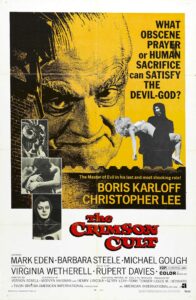
                  • Curse of the Crimson Altar (alternately known as The Crimson Cult) isn’t a very good movie, but occasionally Boris Karloff and/or Christopher Lee are in, which elevates it momentarily.
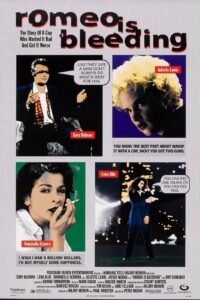
                    • There’s probably more style than substance in Romeo Is Bleeding, but there’s a lot of style, as we watch a rapidly unraveling Gary Oldman collide with the feral force of nature that is Lena Olin.
                    Pretty Maids All in a Row The Toxic Avenger Private Detective 62 The Wonderful World of the Brothers Grimm
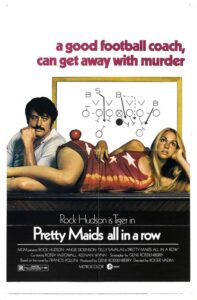
                    • Quentin Tarantino once selected Pretty Maids All in a Row as one of his choices for Sight & Sound magazine’s top 10 greatest films of all time. He had to be trolling them, because the movie is just awful. It’s also deeply odd—a high school sexploitation/slasher movie comedy from the director of Barbarella, written by Gene Roddenberry, starring Rock Hudson, Angie Dickinson, Telly Savalas, and Roddy McDowall—and if your brain didn’t explode halfway into that description, you’re made of stronger stuff than me. The movie is exceptionally icky, confused in its tone, and interesting only as a glimpse into 1970s cringe and the embarrassing depths to which Rock Hudson’s later career sunk.
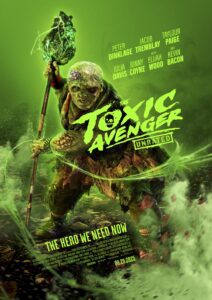
                      • The Toxic Avenger is a lot of silly fun, but maybe has a little too much affection for the original, or is made with more craft and skill than this kind of movie deserves.
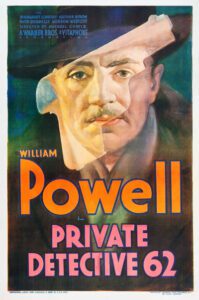
                        • William Powell is, unsurprisingly, very charming in the otherwise kind of slight Private Detective 62.
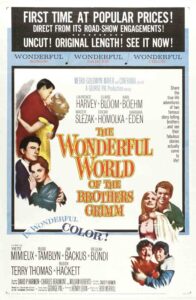
                          • The Wonderful World of the Brothers Grimm is colorful and quaintly charming—and in 1962 the widescreen Cinerama might have seemed genuinely thrilling—but it also drags in almost all of its segments, and that widescreen format feels more like a gimmick whose time has come and gone.
                          La Antena Good Night, and Good Luck The Oblong Box Dead of Winter
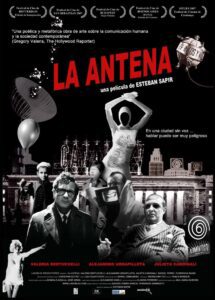
                          • La Antena is interesting, often striking and playful in its imagery, even if I’m not entirely sure what that imagery is in service of, beyond a winking replication of silent movie aesthetics.
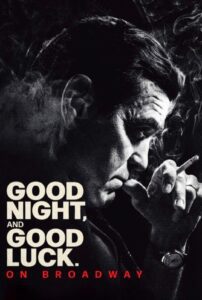
                            • This is an interesting time to remake Good Night, and Good Luck, and it’s interesting to cast Clooney in a different role than the one he played in the movie. But I’m not entirely convinced the stage production adds anything to the original version, and more likely detracts, despite good staging and a very talented cast.
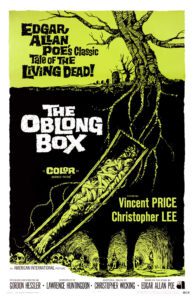
                              • The New York Times wrote at the time that The Oblong Box “illustrate[s] once again that horror can be made to be quaint, laughable and unconvincing at modest prices.” It’s an altogether disappointing and muddled concoction, maybe because it draws little from Edgar Allan Poe besides a title, which even Vincent Price and Christopher Lee—never together—can’t save.
                                • Everyone else around her is also good, but Dead of Winter really rests on Emma Thompson’s shoulders, and she really carries it as the aw-shucks Barb.
                                Flight from Destiny Caught Stealing Bring Her Back The Rounders
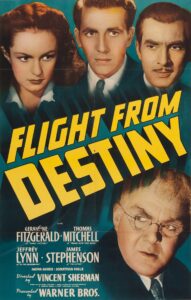
                                • You don’t see a lot of movies as smart and as dumb as Flight from Destiny, which has poses some interesting philosophical questions but then tackles them in some of the silliest ways. It helps that Thomas Mitchell’s performance is so engaging.
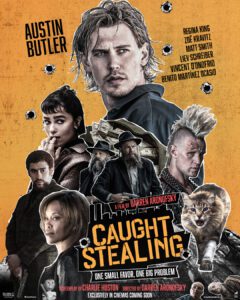
                                  • Caught Stealing has a nastier streak than I was expecting, and even when the violence is cartoonish it’s very bloody, at times even brutal. Still, I had more fun than not with it.
                                    • Bring Her Back can be a tough watch—and I imagine would be more so if I had children of my own. But it’s also genuinely creepy and scary, and there’s a lot to really like about it.
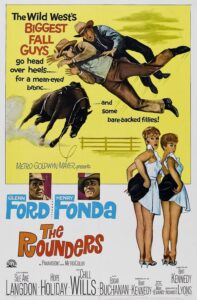
                                      • At the time The Rounders came out, the Los Angeles Times wrote: “The plot is thin, the comedy rather forced and the casting is unbelievable but at least it’s a pleasant change from all those psychological westerns and attempted satires on same.” And yeah…the central, maybe only, joke in the movie seems to be “Glenn Ford and Peter Fonda get thrown off of horses,” and yet it’s not an altogether unpleasant diversion.

                                      I also rewatched three movies:

                                      I think The Social Network continues to work because it doesn’t pretend Mark Zuckerberg isn’t a destructive asshole. It’s kind of a strange rewatch given what we now know about some of the people involved—Armie Hammer on screen, Kevin Spacey behind it, for instance—and I jokingly wondered while watching it if we don’t need a legacy sequel about how much more terrible Facebook has gotten in the 15 years since. But it’s snappily written, well acted, and very well directed.

                                      It Happened One Night is just a charming delight, with such fantastic on-screen chemistry between Clark Gable and Claudette Colbert.

                                      When I saw Sphere in theaters in my 20s, I was mostly just disappointed in the ending. I think maybe it’s a sign of personal growth that I’m now disappointed in the whole thing. I don’t think it’s a terrible movie, though it is largely derivative of other, better ones, and this was not a particularly rewarding rewatch.
                                      I watched 9 movies last week:

                                      The Life of Oharu
                                      The Terror

                                      Copyright HAG ©2009

                                      Omen
                                      • Roger Ebert called The Life of Oharu “the saddest film I have ever seen about the life of a woman.” And he isn’t wrong. The movie arguably lays that sadness on a little strong, visits a melodramatic amount of suffering on Kinuyo Tanaka’s Oharu, but as Ebert notes, it’s “all told as a sad memory of fate,” and is incredibly affecting because of that.

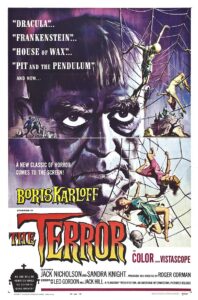
                                        • There is a sort of confused dreaminess to Roger Corman’s The Terror that isn’t uninteresting, but that’s probably just an artifact of its incredibly stitched-together production. It started out as a movie to be made in two days. It eventually took nine months and only feels like a movie made in a weekend.
                                          • Not everything about Omen works, much less works together, but it’s bold and exciting filmmaking telling stories I haven’t seen before.
                                          Little Woods History of the Occult The Woman in Cabin 10
                                          • Brian Tallerico argued that Little Woods “could have been a truly great movie” if only it “had trusted its two leading ladies just a little bit more.” It’s a strong enough debut film, but with performances that are even stronger.
                                            • I’d heard History of the Occult described as the movie that Late Night With the Devil was trying to be. I do think this earlier Argentinian version plays with the similar format in more interesting ways, and does a lot more than just get the period detail right, but I’m not sure it’s a better (or worse) movie because of it.
                                              • The Woman in Cabin 10 is a passable suspense thriller, at best. Keira Knightley is good, but she deserves a lot better, as does the audience.
                                              The Creeping Flesh Call Northside 777 Good Boy
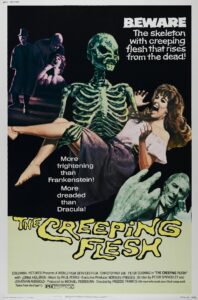
                                              • The Creeping Flesh describes itself as “More frightening than Frankenstein! More dreaded than Dracula!” Which is, of course, not even close to being true. It’s an interesting, well-acted, but muddled and slightly cheap-looking horror diversion.
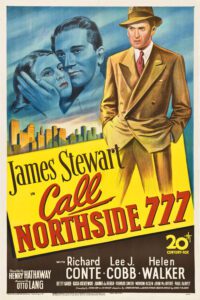
                                                • Call Northside 777 is surprisingly compelling for a movie that’s just Jimmy Stewart’s newspaper reporter following up leads on a cold case.
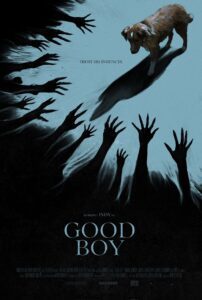
                                                  • He is, it has to be said, a very Good Boy. Of course, the movie around him isn’t perfect. Its story and characters are thin, and it doesn’t resolve in anything like a satisfying way—though, spoiler warning, the thing you’re maybe worried about happening doesn’t happen—but it’s a clever and effectively scary experiment in perspective. And Indy the dog is, no lie, absolutely incredible.

                                                  I also rewatched The Ballad of Buster Scruggs, which I think I liked a lot more on this second viewing. Of the six vignettes, I think my favorites are “The Gal Who Got Rattled” and “Meal Ticket,” but there’s a case to be made for all of them.

                                                  Weekly Movie Roundup

                                                  I watched 6 movies last week:

                                                  The Three Musketeers Red Sonja The History of Sound
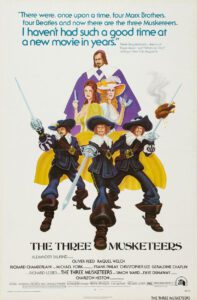
                                                  • There’s a lot of swordplay in Richard Lester’s The Three Musketeers, but not a lot of fun. The movie isn’t entirely charmless—there are hints of sly performances all around—but the plot is meandering, and the characters are drawn so thin it’s a wonder they don’t jus shred entirely each time one of those swords lands.
                                                    • Red Sonja is a vast improvement over the 1985 version, but it’s still not very good. The script is clunky, and the effects are weak—the movie at every turn straining against its obviously low budget and looking like a cheaply produced TV pilot. Which is kind of a shame, because most of the acting is actually not bad, and there’s a potentially interesting story buried beneath all the clanging swords and chainmail.
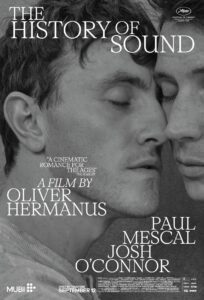
                                                      • There’s a little of the “bury your gays” trope running through The History of Sound, which is maybe unfortunate, but I don’t think works against the film too much, and to its credit isn’t its focus so much as the beautiful, patient, and tenderly acted love story at the center of the film.
                                                      Grace of My Heart The Collector Eddington
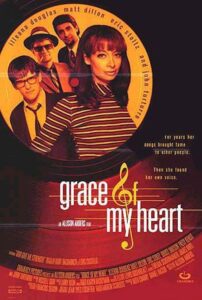
                                                      • Your mileage may vary with Grace of My Heart, depending on what you think of the songs—which to me, with maybe just one or two exceptions, are just fine, but rarely the equal of the songs from the eras which they’re emulating. And while I think the performances are all good, even when the characters they’re in service of border on parody, the movie simply throws too much at you, tries to span so many decades of popular music, that no stories or characters ever feel in any way developed.
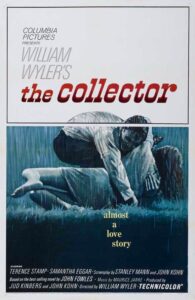
                                                        • Terrence Stamp and Samantha Eggar are good in The Collector, but I’m also not sure there’s a lot more to say about the film than that.
                                                          • Brian Tallerico rightly points out that Eddington is designed to be divisive and provocative, adding that “even if you hate it, it’s kind of done its job.” And, well, fair enough, I suppose, and mission accomplished, because I really did not enjoy the movie. I can admire the skill with which it’s made, the strength of its performances, but in the end it felt like just an unpleasant, hollow, and even borderline irresponsible exercise.

                                                          I also re-watched The Goonies, which is just such an indelible childhood touchstone, and Galaxy of Terror…which is not. There’s a lot that’s really fun about the latter—the cast isn’t bad, Cameron’s production design is legitimately really good, and Corman was a genius at stretching a dollar—but ooh boy, there’s a lot that’s less than great about it. But yeah, of the two, I much prefer the former.

                                                          Weekly Movie Roundup

                                                          I watched 13 movies last week.

                                                          Ballad of a Small Player Frankenstein
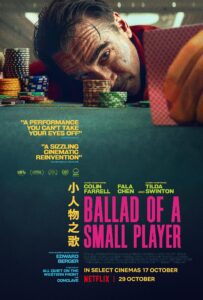
                                                          • I started the week with Ballad of a Small Player, which was mostly forgettable. Despite good performances, especially from the now always more than dependable Colin Farrell, the movie doesn’t really have a lot to say.
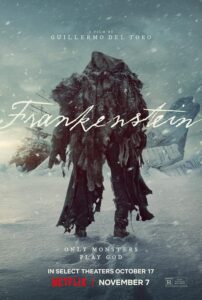
                                                            • And I ended the week with Guillermo del Toro’s Frankenstein. Here, too, I think the performances are the highlight—particularly Jacob Elordi as the Monster—but the film is also gorgeous enough that I’m a little disappointed I didn’t see it on a big screen.
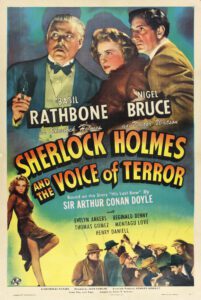
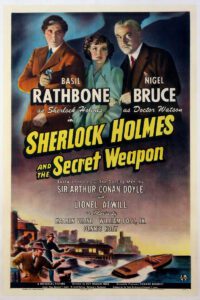
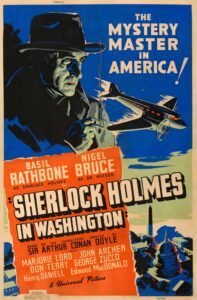
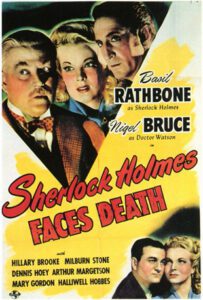
                                                            Sherlock Holmes and the Voice of Terror Sherlock Holmes and the Secret Weapon Sherlock Holmes in Washington Sherlock Holmes Faces Death
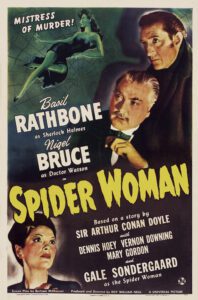
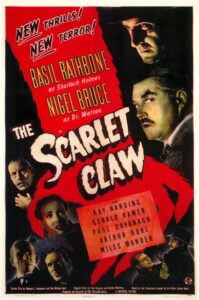
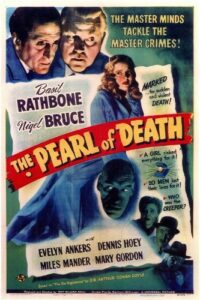
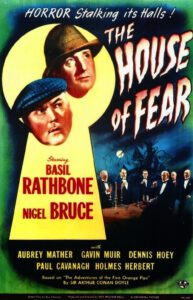
                                                            The Spider Woman The Scarlet Claw The Pearl of Death The House of Fear
                                                            The Woman in Green Pursuit to Algiers Terror by Night

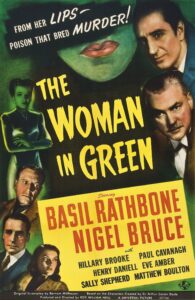
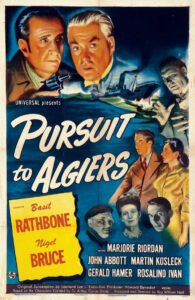
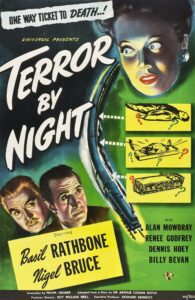
                                                            In between, I watched 11 movies in the Basil Rathbone/Nigel Bruce Sherlock Holmes series. They made 14 films altogether, but I’d previously seen the first two (The Hound of the Baskervilles and The Adventures of Sherlock Holmes), which were made before the rights were acquired by Universal, and for some reason I’d also seen the last (Dressed to Kill), so this was a full run of the series for me. They’re all mostly just okay, diverting and pleasantly short, and Rathbone and Bruce are both a lot of fun in the roles—even if the latter maybe overplays Watson as the bumbling buffoon—but not a one of them is really remarkable, or any great shakes as a mystery. The attempt to modernize Holmes and make him a foe of the Nazis—begun with Sherlock Holmes and the Voice of Terror, but largely abandoned in all but a few details a few films later after Sherlock Holmes in America—never really works. Sherlock Holmes and the Secret Weapon was probably my favorite, while the hypnotism-heavy The Women in Green was easily my least favorite, a fun turn by Henry Daniell as Prof. Moriarty notwithstanding.

                                                            But they’re all kind of vaguely charming, even if none of them really stands out.

                                                            I also rewatched One Cut of the Dead, though, which is a whole lot of fun.

                                                            Weekly Movie Roundup

                                                            Doctor X A House of Dynamite And Soon the Darkness Red Rooms
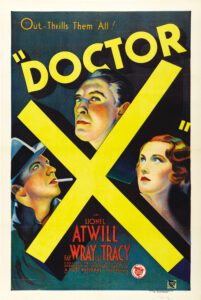
                                                            • The science and policework in Doctor X is a little hokey, but the movie sure does look great.
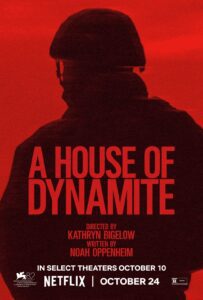
                                                              • A House of Dynamite does everything it sets out to do, and does it fairly well, it’s just kind of a shame it doesn’t try to do anything more. The movie is very tense but a little hollow.
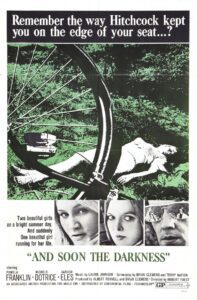
                                                                • I think the NYT‘s Roger Greenspun summed And Soon the Darkness up well when he wrote, “Until the disappearance and for a while afterward everything goes very well toward building tension with understated effects. But eventually, by mere repetition, the understated effects begin to look like poverty of the imagination.”
                                                                  • Red Rooms is not what I would call an enjoyable film—as it stares long and hard into the abyss—but Juliette Gariépy’s inscrutably calculated performance is never short of riveting.

                                                                  Ernest Scared Stupid The Bat Together
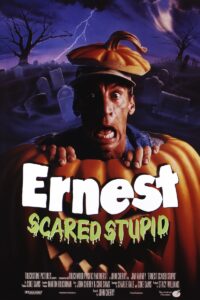
                                                                  • The problem isn’t that I find Jim Varney’s schtick in Ernest Scared Stupid annoying, it’s that I don’t find it remotely funny.
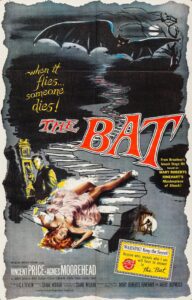
                                                                    • The Bat is a little silly, a little oddly convoluted, but Vincent Price is a lot of fun.
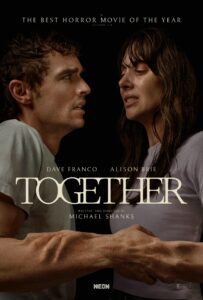
                                                                      • Like a lot of good horror, Together does the very simple thing of taking a metaphor to its extreme and gory conclusion.

                                                                      I also re-watched Doctor Sleep, though this time around the slightly longer director’s cut. I’m too far removed from my original watch of the theatrical cut to say if it’s any better, but it felt much the same: a lot that’s really good, particularly the performances, but also a rushed plot and a fetishizing of Kubrick’s Shining that for obvious reasons isn’t in King’s novel.